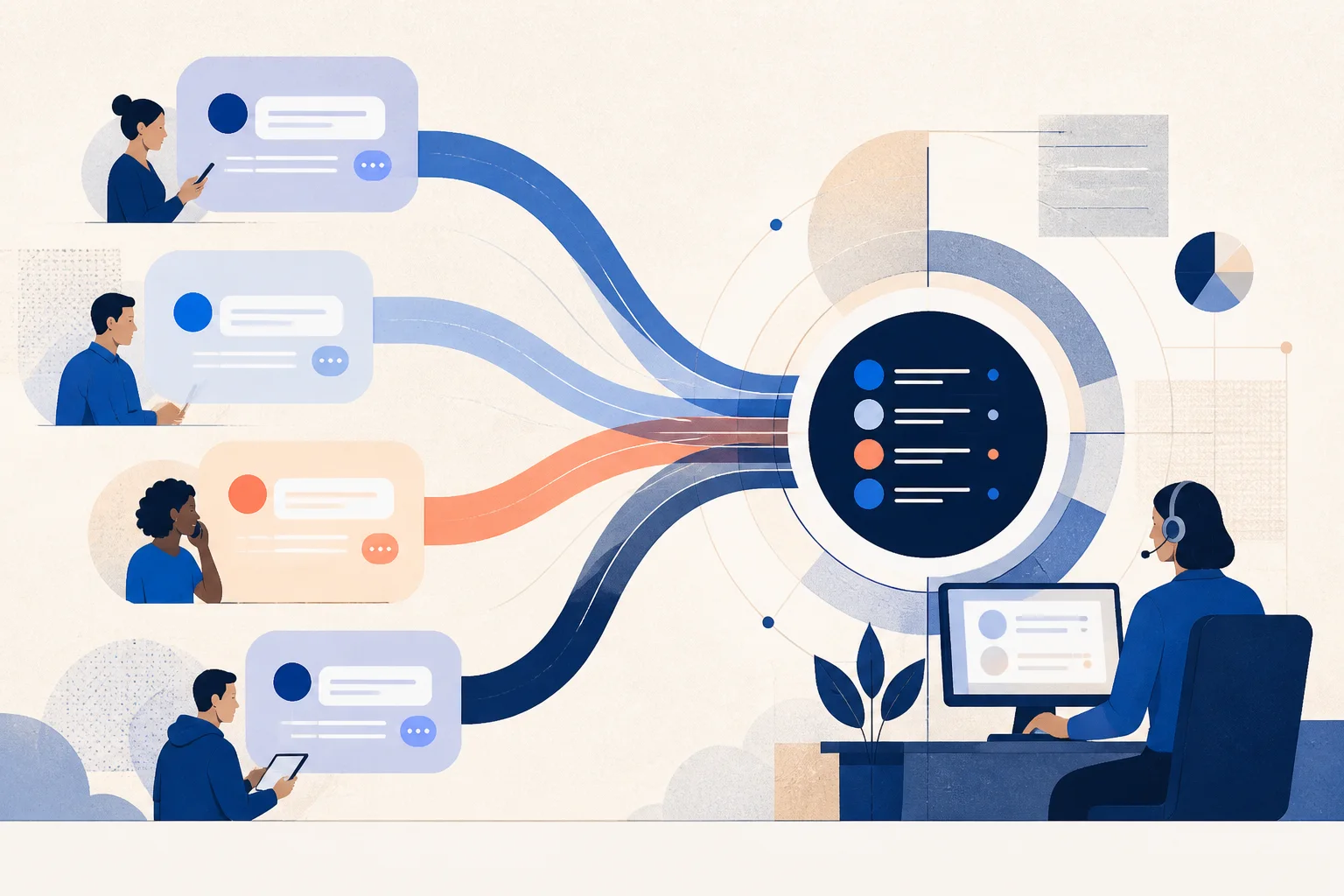
Omnichannel is not a channel count. It is the ability to continue one customer relationship across every touchpoint.
Use this guide with a small sample of real conversations before changing a live workflow. Record the current owner, response path, handoffs, permissions, and reporting result. Then test one controlled change end to end, including failure and recovery. A tool decision is only complete when agents can follow the process and managers can verify the outcome.
What omnichannel actually changes
A multichannel company is present in several places. An omnichannel operation connects those places. The practical difference appears when a customer starts on Instagram, continues on WhatsApp, and the next agent can see the earlier context, the current owner, and the promised next step.
The goal is not to make every channel identical. Each channel keeps its own strengths while the operation shares identity, rules, history, and accountability.
- One customer profile across channels
- A single conversation timeline
- Clear queue and ownership rules
- Consistent permissions and service standards
- Reporting based on the full journey
A rollout that teams can absorb
Start with the highest-volume channel and the team that feels the problem most clearly. Map the current journey, define the official source of truth, connect one channel, and validate real messages end to end before expanding.
Only automate a flow after the human version is stable. Automating an unclear process makes the confusion faster and harder to diagnose.
- Inventory accounts, owners, access, and current automations
- Define statuses, departments, and escalation rules
- Run a small operational pilot
- Measure first response, resolution, and backlog
- Expand one channel at a time
The failures to prevent
The most common failure is presenting a shared screen without shared responsibility. If nobody knows who owns a conversation, the new inbox becomes another place to search.
Identity also needs care. Matching people by weak clues can reveal one customer's history to another. Keep original channel identifiers, prefer exact matches, and make merges reversible and auditable.
- Two active inboxes with no declared source of truth
- Automation before routing and handoff rules
- Metrics split by channel instead of customer journey
- Broad access granted for convenience
- No fallback plan for connection failures
How to know the implementation is working
Success is visible when customers repeat themselves less, transfers retain context, agents spend less time searching, and managers can see ownership and backlog in one place.
Track a small baseline before migration. Compare response time, resolution rate, reopened conversations, transfers without notes, and customer satisfaction after each rollout phase.
- A real incoming message appears with the correct sender and timestamp
- The reply reaches the customer on the right channel
- Ownership survives refresh and transfer
- Unauthorized users cannot open the conversation
- Failures are visible to the agent
- Reports count the event on the correct date